What Foreigners Often Experience on Korean Streets and Subways
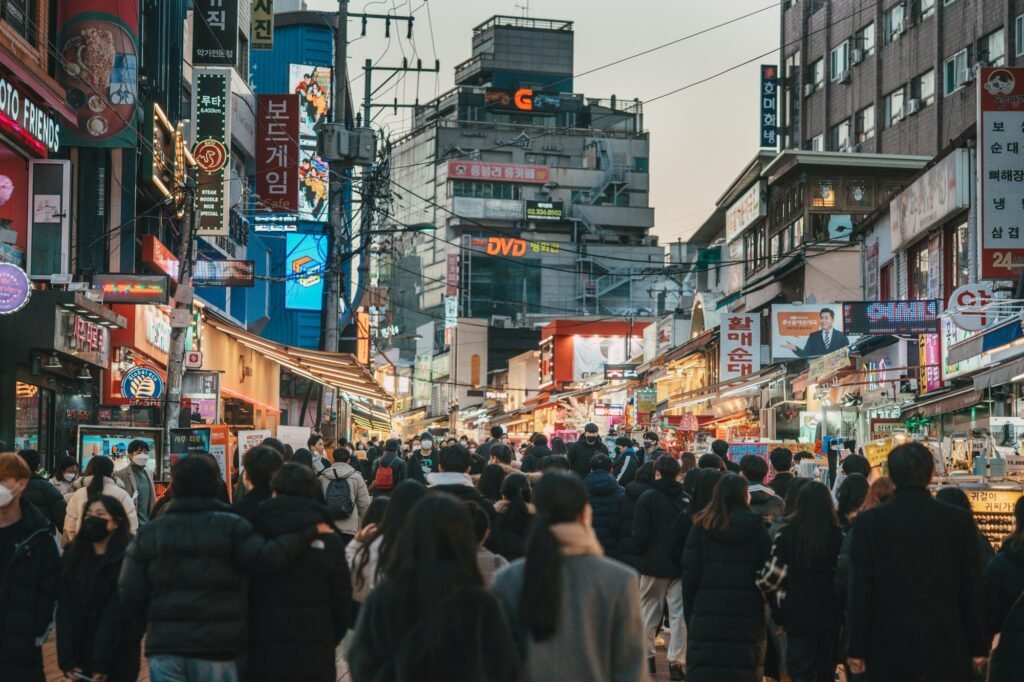
Foreigners in Korea frequently complain about certain experiences, particularly common in busy urban areas like Seoul. For instance, people walking quickly on the street often brush past others in near-collisions, and on the subway, it’s common for people to push through without asking permission or apologizing beforehand. Requesting to pass or offering apologies is generally rare.
“Why are Korean people so rude and lacking in consideration for others?” This is a question many foreigners living in Korea commonly ask.
Even many Koreans find it quite uncomfortable when others rudely push past on the street or subway, or when people walk so quickly they seem about to collide before barely dodging at the last moment. However, since these situations are so familiar in Korea, people tend to accept them as normal and move on. So why do Koreans behave this way? Are they truly rude, or do they lack consideration? Let’s explore this question today.
Personal Space Isn’t a Serious Consideration for Koreans
To cut to the chase: except in specific places like libraries, cafes, and restaurants where priority is granted to private space through seat claiming, Koreans are neither accustomed to nor particularly concerned about respecting personal space in public areas where crowds gather, including streets.
This can be attributed to Korea’s distinctive ppalli-ppalli¹ culture (hurry-hurry culture). The frequent behavior of passing slower pedestrians or pushing past people on the subway without a word simply reflects growing up in a society where efficiency takes precedence over etiquette.
In Western cultures, respecting an individual’s personal space is paramount, even with strangers. People are taught ‘basic manners’ or ‘consideration’ to uphold in public spaces—holding doors open, apologizing immediately after bumping into someone, and respecting privacy by not invading personal boundaries.
In contrast, Korean consideration operates primarily within relationships. Warm consideration and, depending on the situation, added courtesy are extended to those one knows—family, friends, and coworkers. Examples include frequently remembering and celebrating family members’ or close relatives’ birthdays and anniversaries, or making regular visits.
¹ Ppalli-ppalli (빨리빨리): A cultural emphasis on speed and efficiency that permeates Korean daily life.
Personal Space, Population Density, and Culture
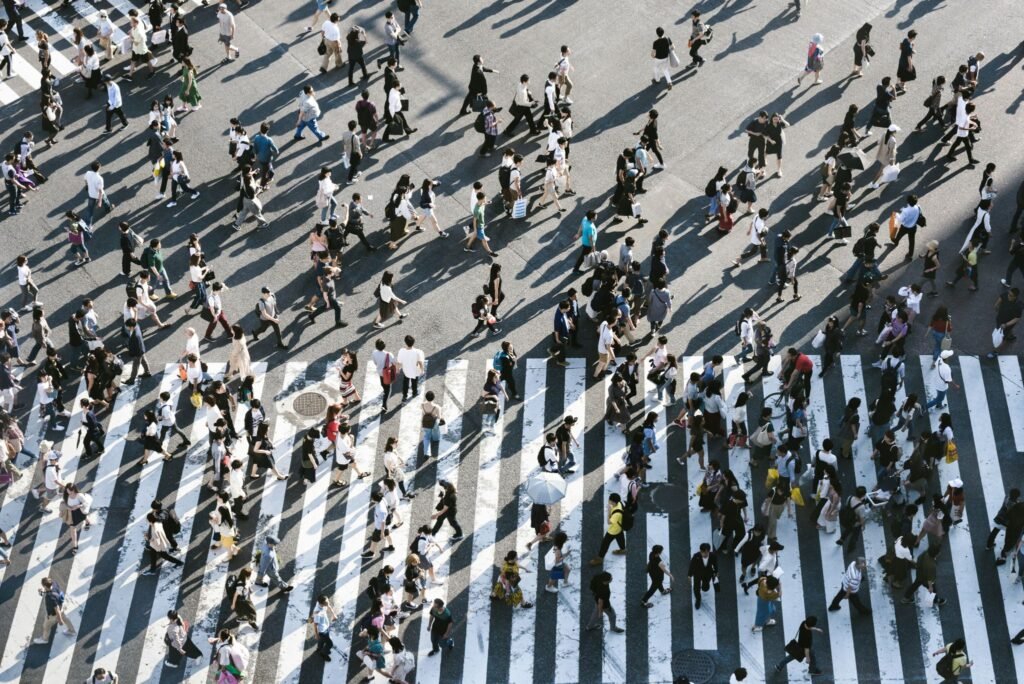
From a cultural psychology perspective, perceptions of personal space are heavily influenced by environment. Seoul’s population density is more than twice that of New York City. Living in crowded spaces with many people has made Koreans relatively unfazed by light physical contact or pushing. Asking permission or apologizing every time would be too cumbersome, so moving efficiently has become a survival strategy.
Stories of extended families of three or more generations living together in one house, huddled in small rooms, or an entire family sharing one room were common in Korea’s modern history. For Koreans familiar with such narratives, the issue of limited personal space or lack of privacy is understandable but has never been taken seriously as a societal concern.
Five Typical Korean Behaviors Foreigners Struggle to Adapt To
1. Loud phone conversations in public – In Korea, expressing emotions openly in close relationships is natural. (This is mainly among older people, though some younger people do it too—business calls for work are generally more forgiven.)
2. Bumping into people and walking on – Moving quickly is the priority; it’s not intentional disregard. Koreans aren’t accustomed to asking someone to move aside or saying “excuse me” while passing. They haven’t been thoroughly educated to do so.
3. Not holding doors open – While not common practice among older generations, younger generations today do this much more frequently.
4. Pressing the elevator close button – The ppalli-ppalli mindset has become an ingrained habit. Many people even press the ‘close’ button before pressing their floor button.
5. Spitting on the street – Many Koreans also find this behavior disgusting. Smokers, in particular, often spit due to throat discomfort, but this sight is much less common nowadays on city streets.
Different Educational Focus
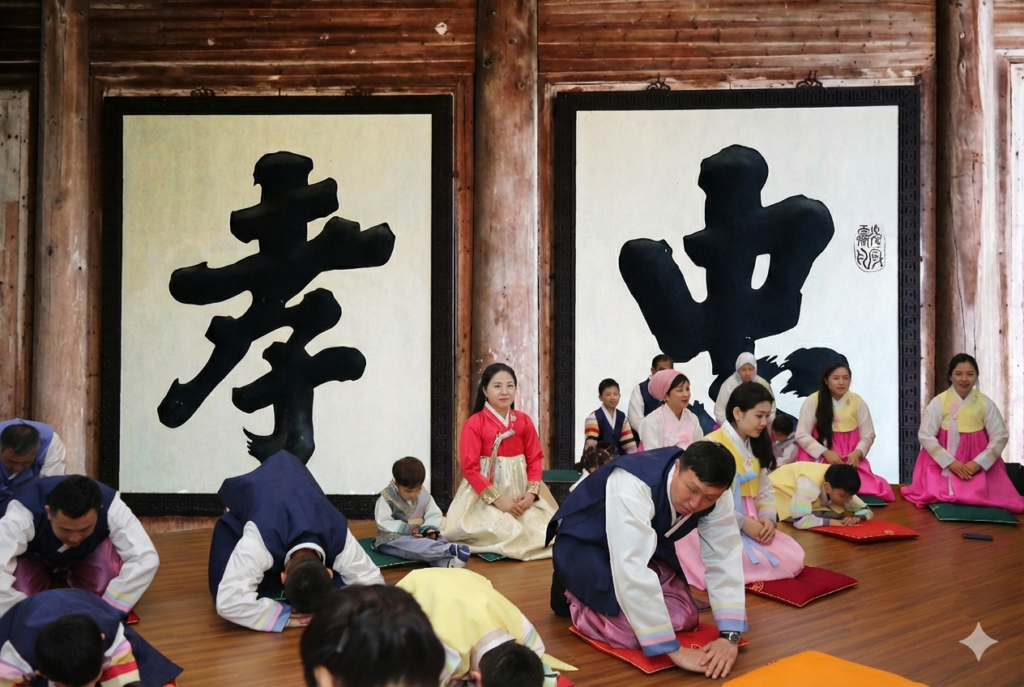
Korean etiquette education centers primarily on ‘respect for elders’ (hyo² -filial piety, and gong-gyeong³ -reverence). Western education, from what I understand, emphasizes ‘horizontal manners among all members of society’ from an early age. This appears to shape behavioral patterns among the public and in public spaces in both Korean and Western societies.
However, Korea’s younger generation is naturally embracing global etiquette standards, and learning about universal public manners is being strengthened.
² Hyo (효): Filial piety, a core Confucian value emphasizing respect and care for one’s parents and ancestors. ³ Gong-gyeong (공경): Reverence and respectful deference toward elders and authority figures.
Comparing Korea to Certain Asian Countries? Off-Limits for Koreans
Regarding social etiquette, foreigners sometimes criticize Korea by comparing it to nearby Japan, saying that despite being Asian countries, Korea is completely different from Japan.
Of course, Koreans generally know what Japanese ‘politeness’ looks like. They understand that Japanese people live on a cultural and emotional foundation of extremely disliking causing inconvenience to others.
However, when hearing such criticism, many Koreans recall Japan’s image as a nation that refuses to fully acknowledge the harm it caused to residents of Korea and many other Asian countries by instigating the Pacific War. This evokes the duality of ‘nation’ Japan hidden behind its ‘politeness.’ Therefore, criticism through such comparisons is not only unacceptable to Koreans but can also be quite offensive.