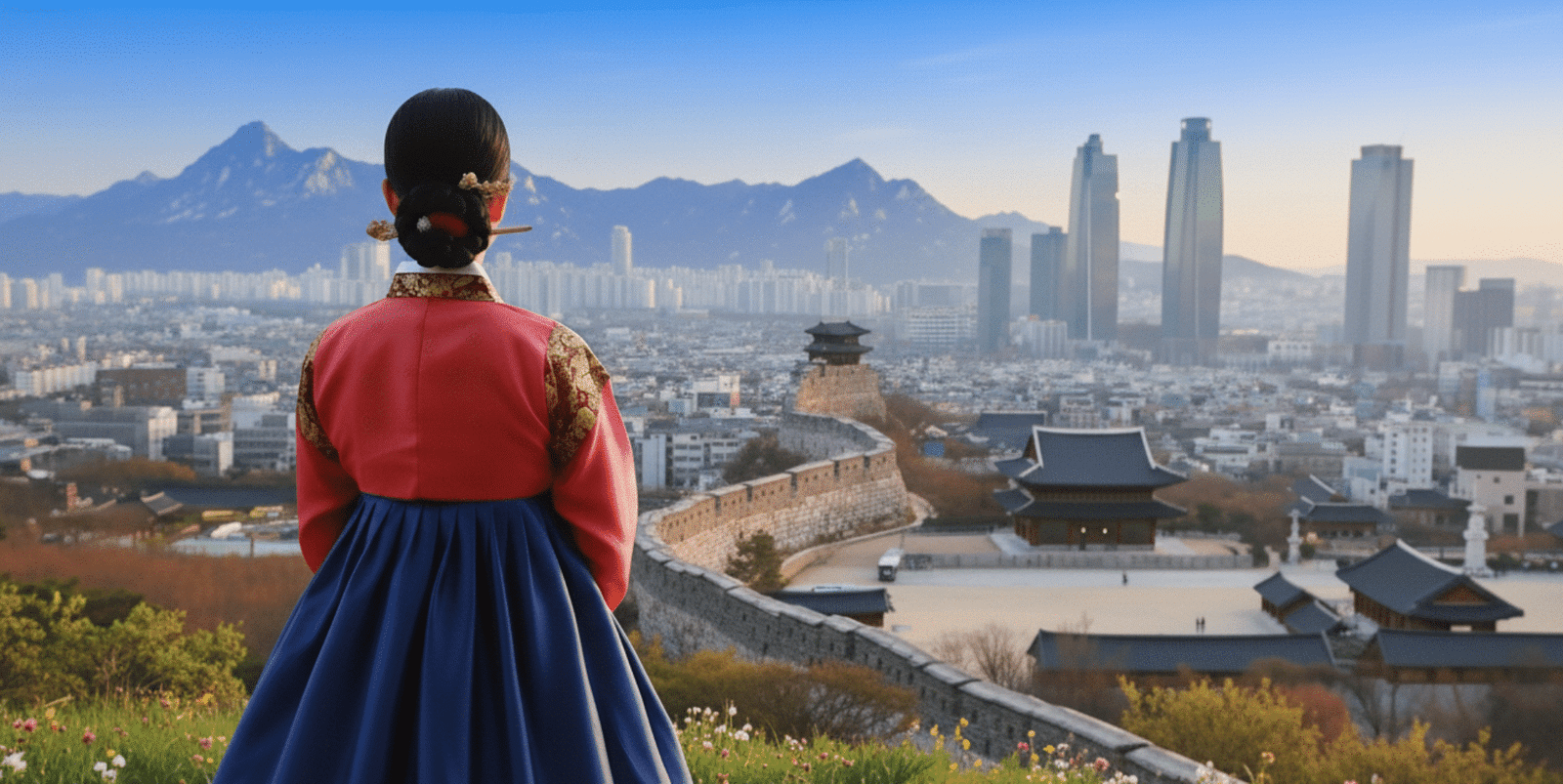
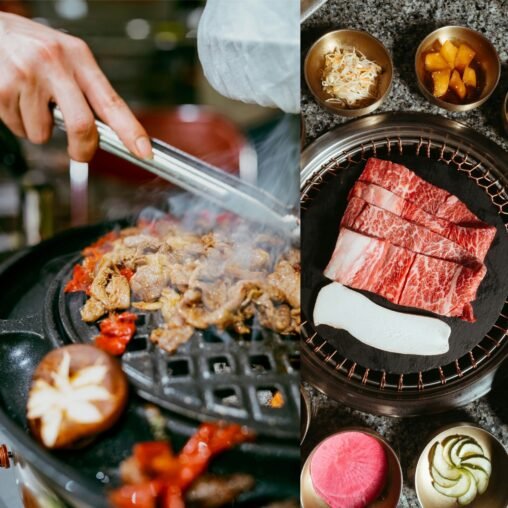
The 11 Korean soul foods explored here each carry their own journey. Some have been companions to Korean life for centuries, while others emerged as beloved staples through particular historical moments or cultural shifts. What unites them is their deep integration into daily Korean life—you’ll find them on street corners, in family kitchens, and at gathering tables across the country. Here are the stories behind these accessible dishes that comfort and connect Koreans today.
1. Kimchi Jjigae: The Evolution of Korea’s Fermented Staple
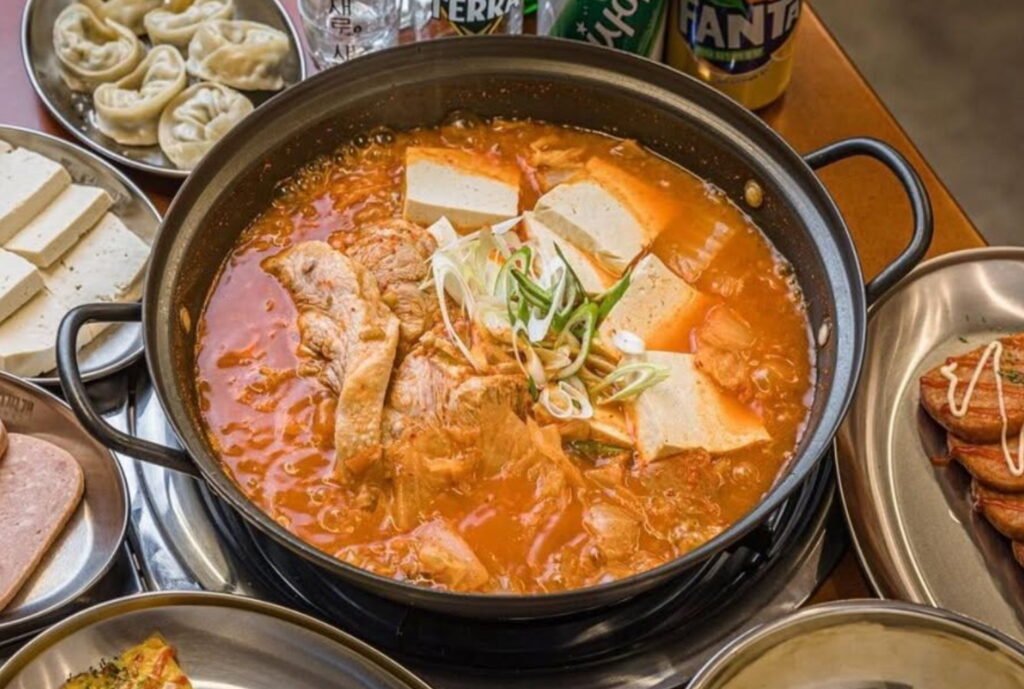
While kimchi’s history dates back to the Three Kingdoms period (57 BCE–668 CE)1, the red, spicy kimchi jjigae we know today is only about a century old. This is because napa cabbage, the main ingredient, has only been widely cultivated on the Korean Peninsula for roughly 100 years. Before that, kimchi was made with whatever vegetables were available.
During the Joseon Dynasty (1392–1897)2, families preserved kimchi as a side dish (banchan)3 to get through the winter. When kimchi became overly sour after months of fermentation, it was transformed into jjigae—a hearty stew—by adding water and boiling it. This marked the beginning of kimchi jjigae.
Today’s kimchi jjigae has become even more diverse. While pork and kimchi were the traditional base, modern versions incorporate canned tuna, ham, sausage, and even Spam. Each household has its own preferred ingredients, and the beauty of kimchi jjigae lies in its flexibility—you can create it instantly with whatever’s in your refrigerator.
1. Kingdoms period: An ancient era when three kingdoms—Goguryeo, Baekje, and Silla—ruled the Korean Peninsula
2. Joseon Dynasty: Korea’s last dynastic kingdom, known for Confucian culture and traditional arts
3. Banchan: Small side dishes served alongside rice in Korean cuisine
2. Ramyeon: Born During Rice Shortages
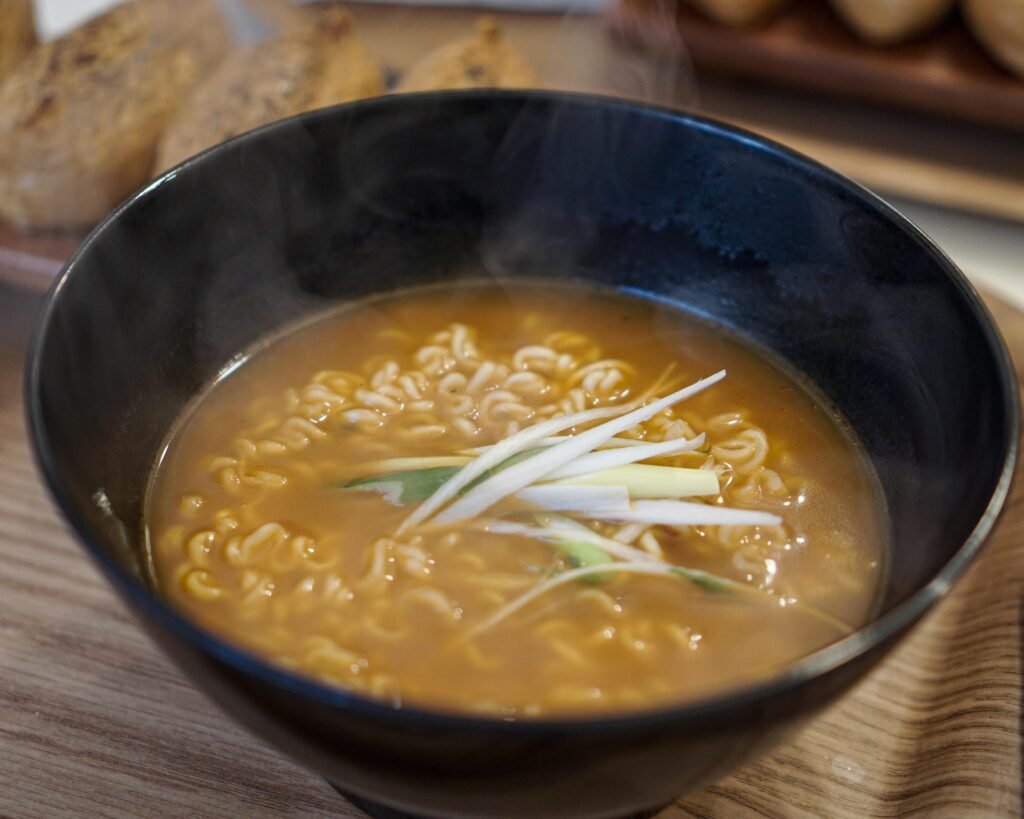
Asian countries have long enjoyed wheat noodle dishes. In Japan, these became known as ramen, and in 1958, instant ramen was invented there. Korea adopted this technology shortly after.
Using techniques from Japan’s Myojo Foods, Korean instant noodles gained rapid popularity starting in the late 1960s, coinciding with the government’s campaign to promote wheat-based foods (an effort to reduce rice consumption when domestic production couldn’t meet demand).
During this period of rice scarcity, ramyeon—priced at just 10 won per packet—became both an affordable treat and a staple food. Today, with countless varieties available, ramyeon has evolved into Korea’s go-to late-night snack and convenience meal.
3. Gamja-tang: Nutrition for Hard-Working People
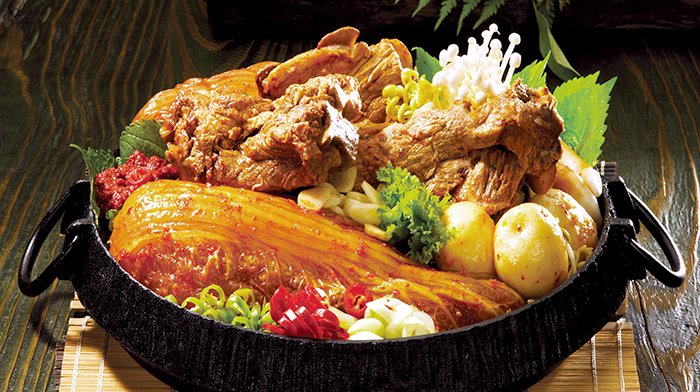
Gamja-tang—pork back-bone stew—is a thick, spicy soup made with pork spine, potatoes, perilla leaves, green onions, garlic, and red peppers. The joy of this dish lies in picking the tender meat off the bones that have been simmered until soft. After finishing the meat, many Koreans fry rice in the remaining broth.
Gamja-tang began taking root in Incheon during the late Joseon period when the port opened and people from across the country brought their diverse food cultures. As Westerners began entering Korea through Incheon, demand for meat increased, leading to greater availability of pork by-products—the main ingredient in gamja-tang.
In the late 1890s, during the construction of the Gyeongin Railway Line, gamja-tang became hugely popular among construction workers and Incheon dock laborers. The dish offered generous portions at an affordable price, as both pork spine and potatoes were inexpensive ingredients.
The rich broth extracted from the bones also makes gamja-tang an excellent haejang-guk4—a hangover cure soup—making it a favorite among those who enjoy drinking.
4. Haejang-guk: Literally “hangover soup,” traditional Korean soups consumed to recover from drinking.
4. Bulgogi: The Celebratory Meat Dish
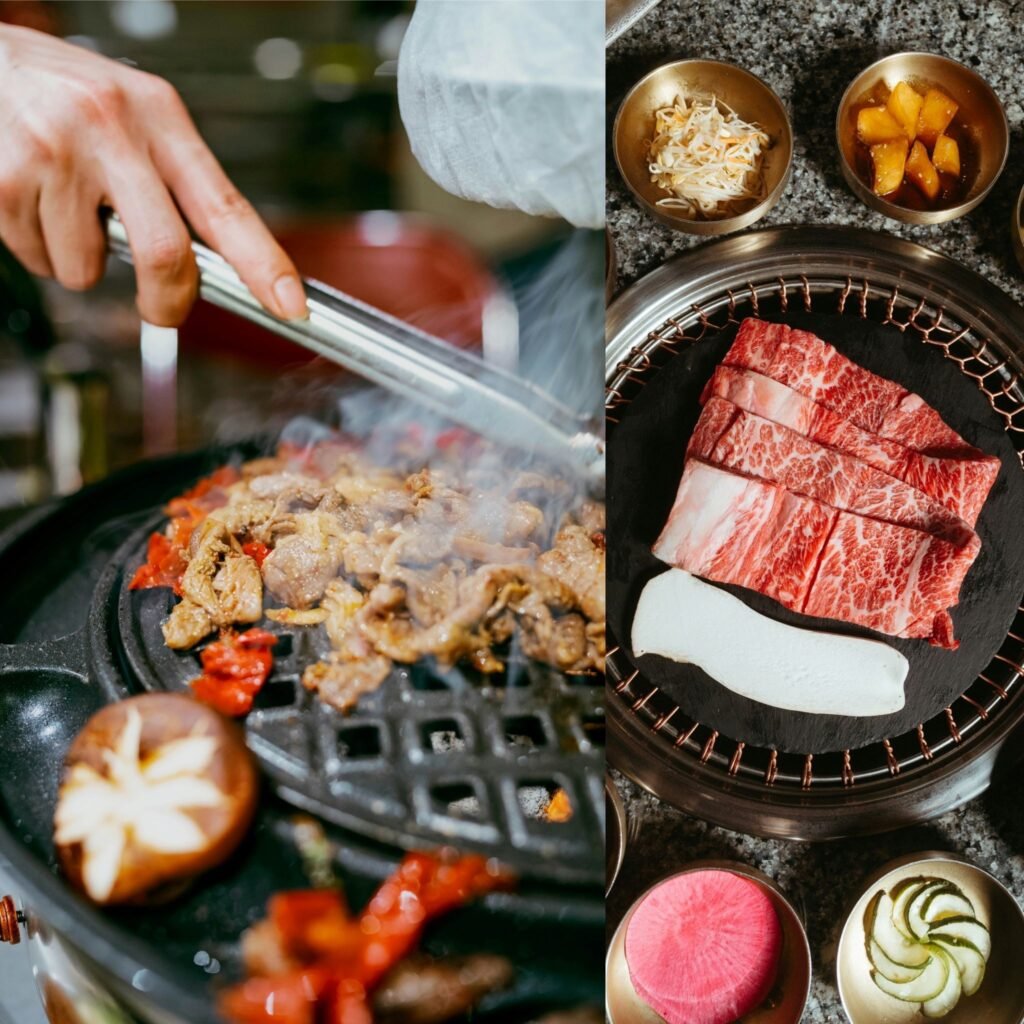
Bulgogi is a combination of the Korean words ‘불’ and ‘고기’, which mean ‘fire’ and ‘meat’ in English, and literally means ‘meat grilled over fire’. It can be considered the forerunner of modern Korean BBQ.
Bulgogi’s origins trace back to ‘maekjeok’ from the Goguryeo period. During the Joseon Dynasty, it was called ‘neobiani’ and served as a special dish in the royal court and aristocratic households.
Until Korea’s modern era, meat was relatively scarce for ordinary people. This was because agricultural society prioritized farming over livestock production. Cattle, in particular, were essential for farming and rarely slaughtered for food. Pigs, which consumed grains, were difficult for common people to raise, and pork consumption was sometimes discouraged due to hygiene concerns.
With economic growth in the 1970s-80s, meat consumption increased, and beef bulgogi became a centerpiece for birthdays, holidays, and family gatherings. The phrase “Today is a meat day” came to signify celebrations or rare family reunions.
5. Samgyeopsal: From Coal Mines to Korea’s Favorite Drinking Food
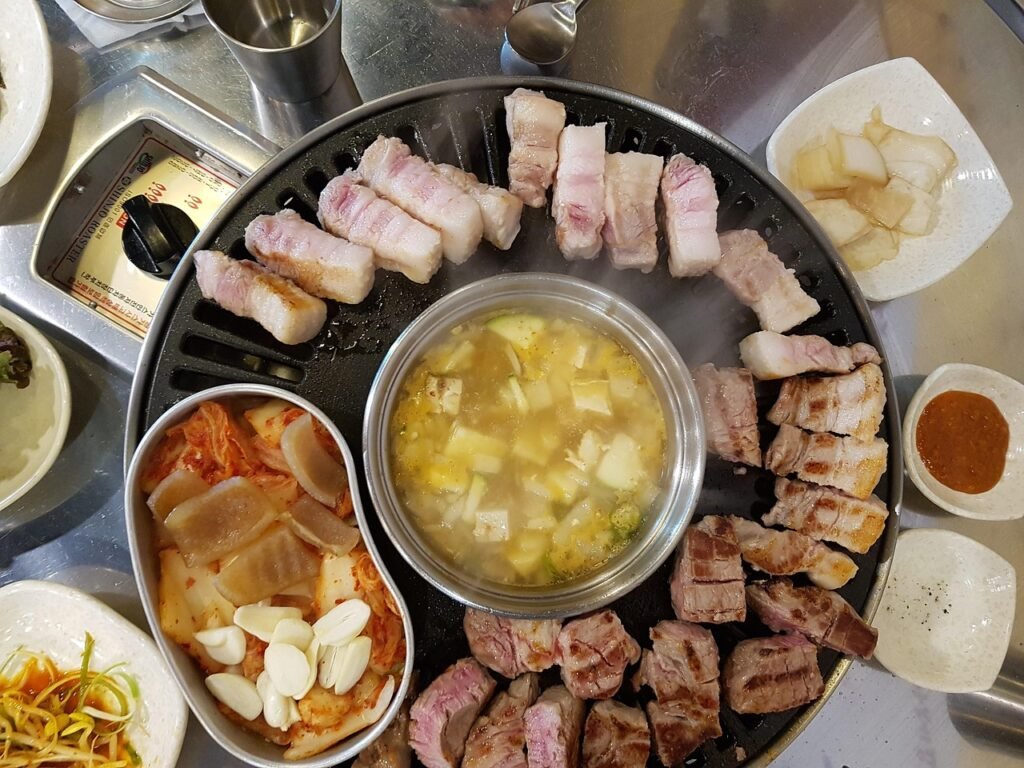
During the 1970s industrialization era, samgyeopsal (pork belly) held special meaning for coal miners and construction workers. After grueling physical labor, the savory richness of grilled pork paired with soju provided the ultimate reward and relief. Coal miners particularly believed that the fat in samgyeopsal helped cleanse coal dust from their bodies.
Today, samgyeopsal—a type of Korean barbecue ingredient —has become the standard menu for office workers and friends’ gatherings. The iconic scene of friends chatting amid smoky grills and clinking soju glasses has become deeply ingrained in Korean culture.
The phrase “Let’s go eat samgyeopsal today” often meant a company dinner on payday, making it synonymous with workplace bonding.
6. Chicken: The Birth of K-Chicken

Korean fried chicken’s rise began in the 1980s when KFC entered the Korean market, significantly raising awareness of fried chicken.
Subsequently, chicken franchise brands in the Daegu and North Gyeongsang regions—where poultry farms were concentrated—developed unique cooking methods tailored to Korean tastes, including soy sauce fried chicken and spicy yangnyeom chikin coated in a sweet and spicy glaze.
Chicken became a true soul food after the 1997 IMF financial crisis. As many lost their jobs and opened chicken restaurants, 24-hour delivery culture spread nationwide. The phrase “Today is chicken day!” became a small gift and comfort people gave themselves after difficult days.
In the 2000s, “chimaek”5 [(chicken] + (maekju, Korean for beer)] culture became essential for watching baseball and soccer games. In 2012, “chimaek” was officially added to the Oxford English Dictionary.
5. “Chimaek” refers to the popular Korean drinking culture of “chicken and beer,” and is a portmanteau of “chicken” and “maekju”(beer)
7. Gimbap: The Essential Picnic Food
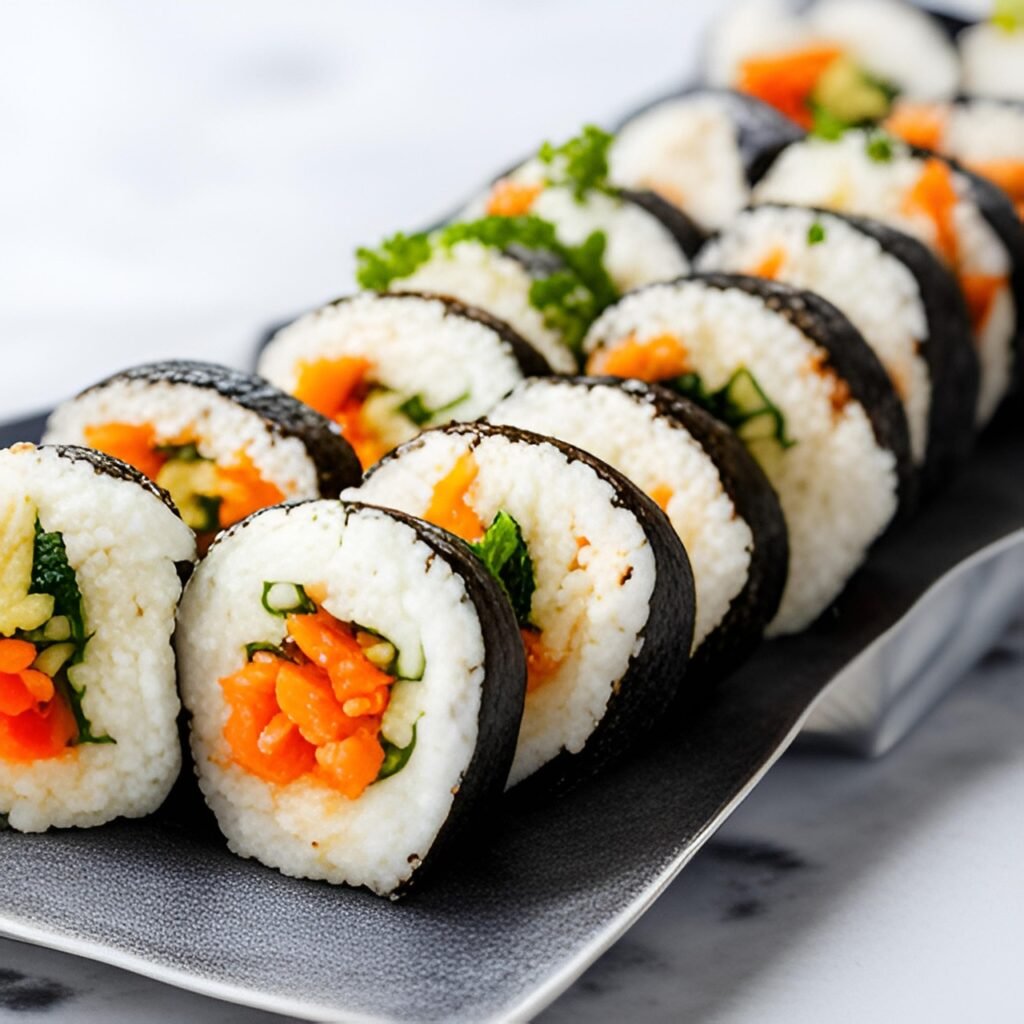
Gimbap’s history goes back to the Japanese colonial period. While influenced by Japanese norimaki6, Koreans transformed it into something distinctly their own. A 1939 Chosun Ilbo article described gimbap made with seaweed, rice, soy-braised beef, and kimchi as the perfect packed lunch.
In the 1950s-60s, gimbap sold at train station platforms signaled the start of journeys. In the past, vinegar was added to the rice to prevent spoilage during outdoor activities, but the style eventually evolved to use sesame oil instead.
Gimbap became a picnic staple for several reasons: it was easy to carry, convenient to eat outdoors with your hands, and nutritionally balanced with both rice and various fillings. In earlier times, the equation “gimbap = picnic food” was so firmly established that gimbap itself signified special occasions.
6. Norimaki: Japanese sushi rolls wrapped in seaweed.
8. Tteokbokki: From Palace to Street Food
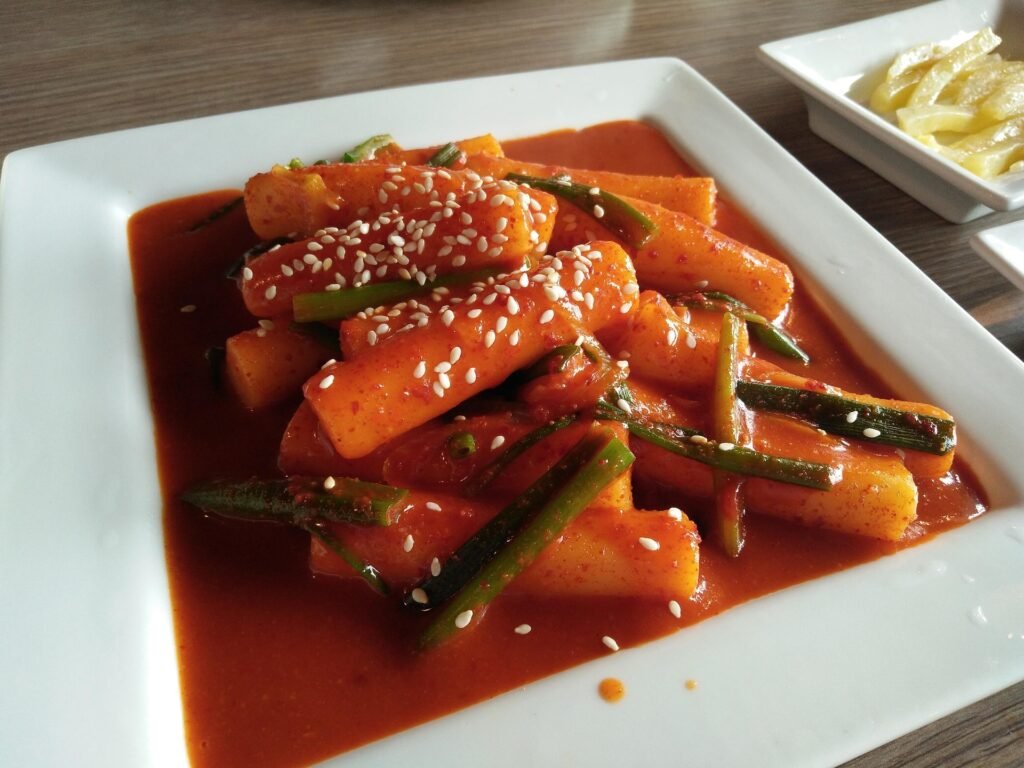
Tteokbokki’s main ingredient, garaetteok, is made by steaming rice flour and stretching it into long, cylindrical rice cakes. Originally, tteokbokki was a Joseon Dynasty royal court dish.
First appearing in the late 19th-century cookbook Siuijeonseo, the original tteokbokki was a refined dish made by stir-frying garaetteok with beef in soy sauce. Called “royal tteokbokki” or “soy sauce tteokbokki,” it contained no spice whatsoever.
The spicy, red gochujang-based tteokbokki was born in 1953 in Seoul’s Sindang-dong when someone mixed gochujang into the rice cakes, creating an entirely new flavor profile.
In the 1960s-70s, coinciding with the government’s campaign to promote wheat-based foods, wheat flour tteokbokki emerged, and it became a primary snack for students. By the mid-1970s, Sindang-dong tteokbokki shops featured jukeboxes and DJs, transforming them into cultural spaces for young people.
Tteokbokki played a central role in establishing Korea’s preference for spicy flavors.
9. Mandu: Family-Made Holiday Food
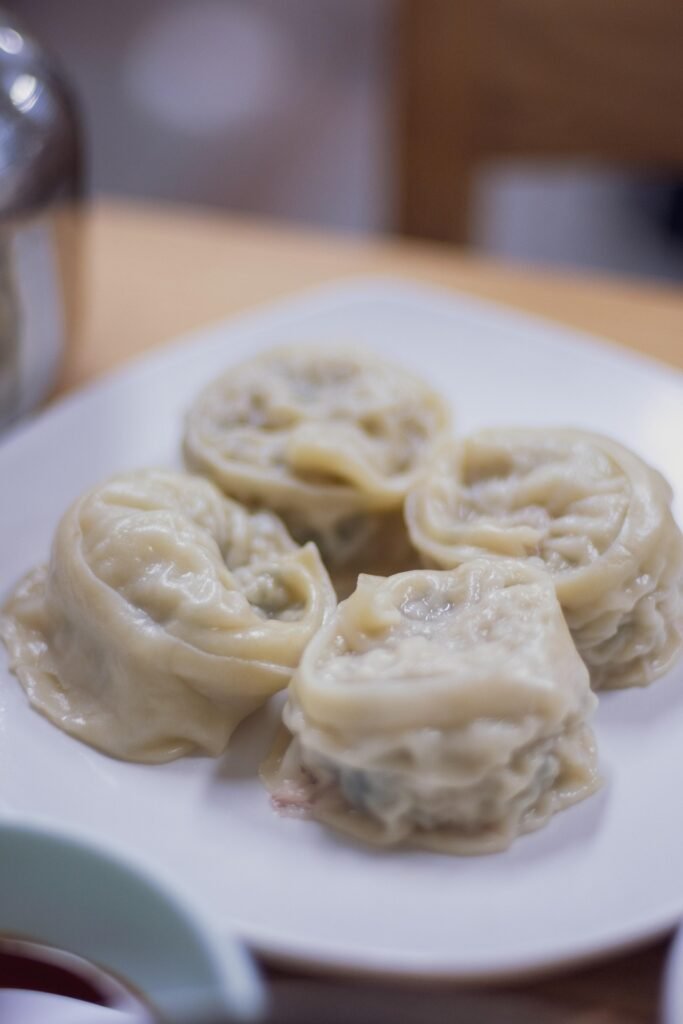
Mandu (dumplings) originated in Central Asia and were brought to China via the Silk Road, then to Korea, where they were Koreanized.
Korean mandu typically have thick wrappers and generous fillings made with meat, mung bean sprouts, chives, various vegetables, glass noodles, and sometimes kimchi.
While many now purchase pre-made mandu, Korean families traditionally gather to make them together during holidays—a scene that remains familiar and cherished.
10. Bibimbap: Eastern Philosophy on a Plate

Bibimbap’s history is surprisingly ancient. It first appears as “hondongbap” (混沌飯) in *Gijaejapgi* by Park Dong-ryang (1569-1635) from the 16th-century Joseon period. In the 17th-18th centuries, it was called “goldongbap” (骨董飯), meaning “mixing various things together.”
The late 19th-century cookbook *Siuijeonseo* records “bubimbap” in Korean script with detailed cooking instructions: stir-frying seasoned meat, sautéing various colored vegetables (namsae)7, adding crushed dried kelp, and topping with egg strips and meat balls.
Bibimbap embodies the philosophy of yin-yang and the five elements (eumyangohaeng)8 through its five-color harmony: white (rice), red (gochujang), yellow (egg), green (spinach, zucchini), and black (shiitake mushrooms). An interesting story surrounds Jeonju bibimbap’s origin: in the 1800s, gisaeng9 in Jeonju mixed leftover side dishes in a bowl to serve guests, and it unexpectedly became a huge hit.
After Michael Jackson reportedly enjoyed bibimbap during his 1998 visit to Korea, international awareness of the dish grew significantly.
7. Namsae: An old Korean term for vegetables.
8. Eumyangohaeng (Yin-yang and Five Elements): Traditional East Asian philosophy about the balance and interaction of opposing forces and five fundamental elements.
9. Gisaeng: Female entertainers in traditional Korea, trained in music, dance, and conversation.
11. Samgyetang: Hot Soup to Beat the Summer Heat
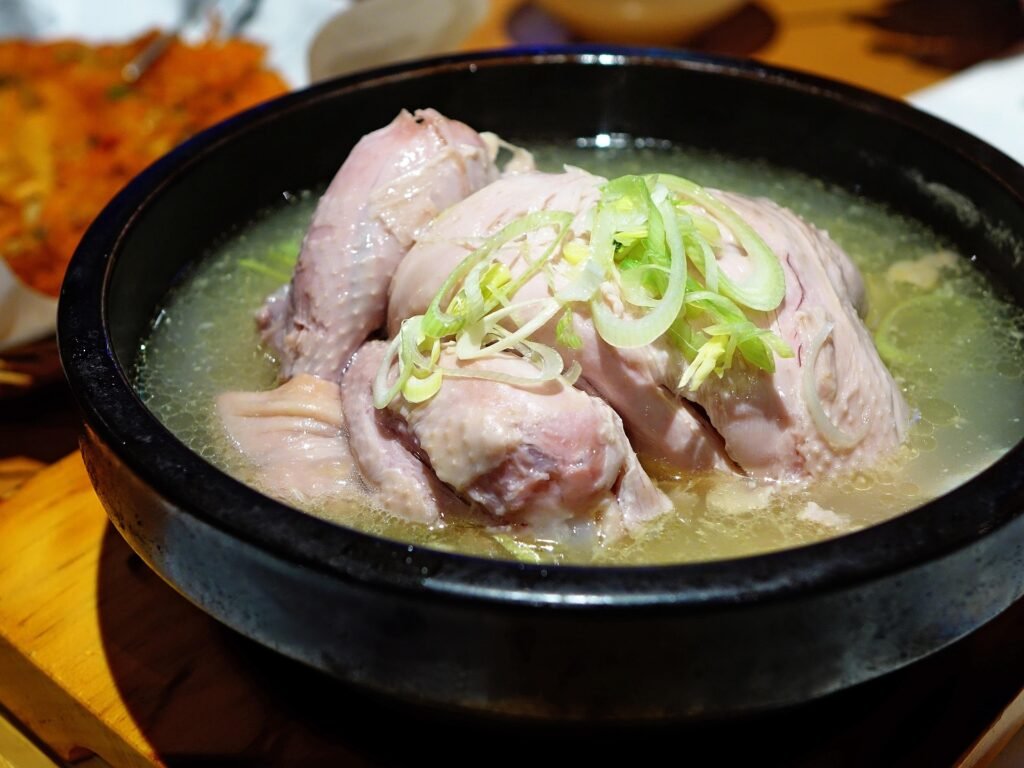
Modern samgyetang began among the wealthy during the Japanese colonial period. Initially called gyesamtang (鷄蔘湯)—literally “chicken-ginseng soup”—it started as chicken broth with ginseng powder added. Chicken was the main ingredient, with ginseng as a supplement.
Samgyetang restaurants appeared in the 1950s, and the dish evolved to include whole dried or fresh ginseng instead of powder, becoming increasingly popular.
This dish is often recommended for those weakened by illness and is especially popular in summer. The reasoning may seem counterintuitive: during summer, when people sweat heavily and lose energy, consuming hot foods—chicken and ginseng, long known in Korean tradition as heat-generating ingredients with excellent nutritional value—actually helps restore energy to heat-exhausted bodies.
This practice mirrors the American custom of eating chicken soup when sick, reflecting similar cultural and psychological foundations.
Gwangjang Market: Flavors from Korea’s Oldest Traditional Market
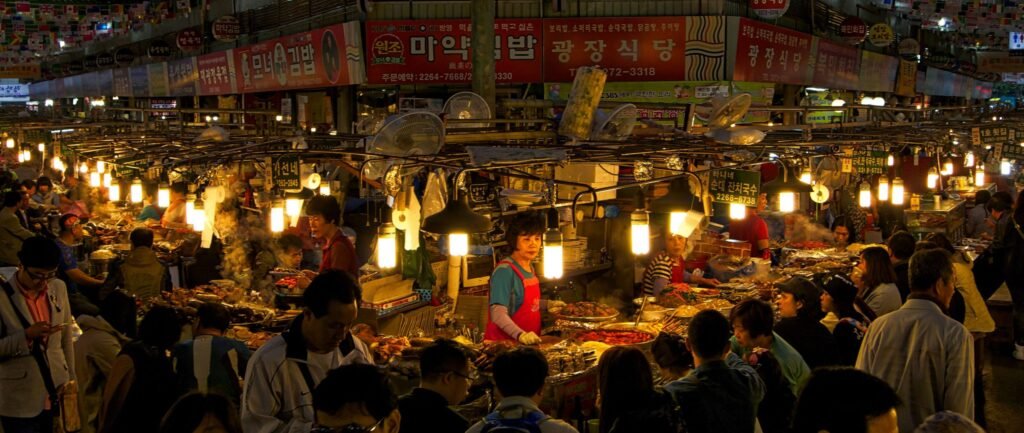
Located in Seoul’s Jongno-gu district (Jongno 5-ga Station, Line 1, Exit 8, 3-minute walk), Gwangjang Market was established in 1905 as Korea’s oldest traditional market. The name “Gwangjang” (廣長) originally meant to be built between two bridges—Gwanggyo (“wide bridge”) and Janggyo (“long bridge”)—though the pronunciation remains the same, the characters now used (廣藏) mean “widely gathering and preserving.”
After the 1905, when Japanese control over Namdaemun Market tightened, Korean merchants established Gwangjang Market as an economic breakthrough. After the Korean War, merchants from across the country flocked to this area to make a living, and their struggles are embedded in the market’s history. Here you can find not only some of the foods mentioned above but also these distinctive dishes:
Bindaetteok: Mung bean pancakes, originating when refugee women after the Korean War began making pancakes with shortening from U.S. military bases.
Yukhoe: Thinly sliced raw beef seasoned with soy sauce and sesame oil, similar to Western steak tartare.
Donggeurangtaeng (Meat Balls): Korean pan-fried patties made by mixing ground meat, tofu, and vegetables, shaped into round, flat discs, coated in egg or flour, and pan-fried. Also called “donjeonya” or “wanjajeon,” these are popular as holiday dishes and side dishes.
Hotteok: Winter street food made from wheat dough filled with brown sugar and nuts, then griddled.
Kalguksu: Hand-cut noodle soup that was once a luxury when wheat flour was scarce, but became accessible to everyone after the Korean War when American aid brought wheat flour in large quantities.
What Makes Korean Soul Food Special
Like people everywhere, Koreans associate soul food with much more than simply filling their stomachs. These are the dishes that come to mind after a tough day at work, when feeling homesick far from family, celebrating special occasions with loved ones, or unwinding with friends and colleagues after hours.
Throughout Korea’s modern history—marked by colonial exploitation, the Korean War, and the economic hardships that followed—food was rarely abundant. The dishes mentioned above became deeply woven into everyday Korean life.
For older generations, these foods evoke memories of their life journey, triggering nostalgia for times past. For younger Koreans, surrounded by countless fusion cuisines and innovative flavors, these traditional dishes remain timeless favorites that never lose their appeal.
🍽️ Where to Find These Soul Foods in Seoul
Gangnam Area (Gangnam Station, Line 2)
Samgyeopsal (Pork Belly)
- Tong Gangnam Tongdweji Samgyeopsal – 6-minute walk (450m) from Gangnam Station. Thick, aged pork belly with table-side grilling service. Highly popular among both locals and international visitors.
- Yukdeok Sikdang Gangnam Branch – 5-minute walk (400m) from Gangnam Station. Previously recommended popular restaurant.
Chicken (Korean Fried Chicken)
- Chicken in the Kitchen – 10-minute walk (700m) from Gangnam Station. Craft beer and fusion chicken, popular with young crowds and foreigners.
- Kyochon Chicken Gangnam Branch – 3-minute walk (200m) from Gangnam Station. Famous chain with excellent accessibility.
Mandu (Dumplings)
- Kkangtong Mandu – Seocho District, 3-minute walk from Gyodae Station (Line 2), Exit 11. Mentioned in the Michelin Guide, famous for dumpling hot pot.
Bibimbap
- Gonjiam Someori Gukbap & Bibimbap – 4-minute walk (300m) from Gangnam Station. Well-prepared Korean dishes, highly rated by foreign tourists.
Kimchi Jjigae
- Gangnamjip Kimchi Jjigae – 7-minute walk (550m) from Gangnam Station. Specialized in well-fermented kimchi stew.
Bulgogi
- Seochomyeonok – 8-minute walk (600m) from Gangnam Station. Great place to enjoy bulgogi alongside cold noodles.
Tteokbokki
- Sinbul Tteokbokki Gangnam Branch – 4-minute walk (300m) from Gangnam Station. Specializes in spicy tteokbokki.
Hongdae Area (Hongik University Station, Line 2)
Samgyeopsal
- Hanampig House Hongdae Branch – 5-minute walk (400m) from Hongik University Station. Popular chain where staff grills the meat for you.
Gamja-tang (Pork Bone Stew)
- Idaejo Ppyeodagwi – 4-minute walk (300m) from Hongik University Station. Famous gamja-tang restaurant near Hongdae.
Mandu
- Hongdae Mapo Mandu – 5-minute walk (400m) from Hongik University Station. Popular for simple snacks and dumplings.
Kimchi Jjigae
- Baekchae Kimchi Jjigae Hongdae Direct Branch – 7-minute walk (550m) from Hongik University Station. Kimchi jjigae specialty chain.
- Guldari Sikdang – Mapo District, near Gongdeok Station (Lines 5/6, transfer from Line 2 Hongik University Station or taxi). Mapo District’s longstanding kimchi jjigae institution, known for deeply fermented kimchi.
Tteokbokki
- Jopok Tteokbokki – 5-minute walk (400m) from Hongik University Station. Symbol of Hongdae street food, famous among foreigners for its spicy experience.
Bulgogi
- Sanullim 1992 – 10-minute walk from Hongik University Station. Traditional Korean full-course bulgogi, great place to enjoy with Korean alcohol.
Jamsil Area (Jamsil Station, Line 2)
Tteokbokki
- Mokkoji Ae – 5-minute walk from Jamsilsaenae Station (Line 2), Exit 4. The mecca of instant tteokbokki, popular for its value and retro atmosphere.
Gamja-tang
- Ibadom Gamja-tang (Jamsil Branch) – 7-minute walk (550m) from Jamsil Station. Large gamja-tang chain with spacious seating and comfortable atmosphere.
Gimbap
- Lee Gimbap (Lotte Department Store Jamsil Branch) – 1-minute walk, inside Jamsil Station. Premium gimbap with generous fillings, popular for quick meals.
Samgyetang (Ginseng Chicken Soup)
- Tosokchon Samgyetang Jamsil Branch – 10-minute walk (700m) from Jamsil Station. Serves traditional samgyetang.
Central Seoul (Jongno-gu & Jung-gu Districts)
Bulgogi
- Hanilkwan (Myeongdong Branch) – Jung District, 5-minute walk (400m) from Euljiro 1-ga Station (Line 2). 80-year tradition of royal court bulgogi with elegant atmosphere.
Samgyetang
- Tosokchon Samgyetang – Jongno District, near Gyeongbokgung Station (Line 3, transfer required from Line 2). The most famous samgyetang restaurant among foreign tourists.
Gamja-tang
- Dongwonjip (Gamja-guk) – Jung District, 5-minute walk (400m) from Euljiro 3-ga Station (Line 2). Potato soup restaurant with an old-establishment atmosphere.
Gimbap/Tteokbokki
- Original Namsan Tteokbokki/Gimbap – Jung District, approximately 15-minute walk from Euljiro 1-ga Station (Line 2). Represents Myeongdong’s street food culture.
Gwangjang Market (Traditional Market Experience)
Location: Jongno 5-ga Station (Line 1), Exit 8, 3-minute walk
Specialties:
- Bindaetteok (mung bean pancakes) – Try Sunhee’s Bindaetteok, 40-year tradition
- Yukhoe (raw beef) – Changsin Yukhoe offers fresh yukhoe with complimentary beef soup
- Mayak Gimbap (“addictive” mini gimbap) – Monyeo Mayak Gimbap, served with mustard sauce
- Hotteok, Kalguksu, and various traditional street foods